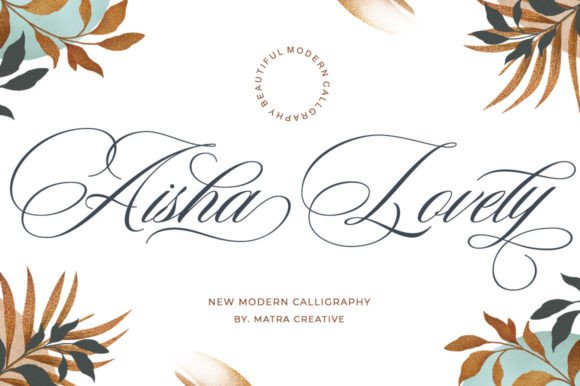
Aisha Lovely: Classic Typography with a Modern Script Edge
There's a moment in every design project where the typeface either elevates the concept or quietly undermines it. You've seen it happen—a beautiful logo feels just slightly off, a social media post loses its punch, or a wedding invitation lacks the warmth you envisioned. Often, the missing piece isn't a color or an image; it's the right font. For projects demanding elegance with personality, a script font like Aisha Lovely offers a compelling solution, blending classic typographic inspiration with a distinctly modern, fluid character.
This typeface isn't just another decorative script. It's built with a practical understanding of how designers and creators actually work. The curves are deliberate, the letter connections feel natural, and the overall rhythm creates a visual flow that guides the eye without overwhelming it. It's this balance that makes it suitable for more than just a headline—it can anchor a brand's entire visual voice.
Where Classic Meets Contemporary in Your Projects
The beauty of a well-crafted script font lies in its versatility. Aisha Lovely draws from timeless calligraphic traditions but strips away the overly ornate flourishes that can date a design. The result is a typeface that feels both sophisticated and approachable. Think of it as the typographic equivalent of a tailored blazer—it has structure and elegance but can be dressed up or down depending on the occasion.
For a small business owner developing a brand identity, this font can become a cornerstone. Imagine a boutique bakery using it for its logo on packaging, menu boards, and social media graphics. The consistent use of this elegant script builds immediate recognition. It communicates artisanal quality and care before a customer even tastes the product. Similarly, a freelance photographer could use it for watermarks and client delivery templates, adding a professional, personal touch that feels cohesive across all touchpoints.
Practical Applications Beyond the Headline
While it's a fantastic display font for headers, its utility extends into areas many script fonts struggle with. The key is understanding its strengths. It shines in contexts where you need to inject personality and a human touch without sacrificing clarity.
- Branding & Logo Design: It creates a memorable mark for businesses in beauty, fashion, lifestyle, and creative services. Pair it with a clean sans serif for body text to maintain readability.
- Packaging & Labels: On product labels for candles, cosmetics, or gourmet foods, it adds a layer of premium, handcrafted appeal. The PUA encoding is a bonus here, allowing easy access to special swashes for unique details.
- Digital Presence: Use it strategically on websites—for hero sections, pull quotes, or section headers—to break up monotony. It's equally effective in email marketing headers or as the primary font for a blogger's title graphics, setting a distinct tone.
- Print & Editorial: In magazines or lookbooks, it can be used for article titles or chapter headings. For print materials like business cards or stationery, it conveys elegance and intention.
- Events & Invitations: This is a natural fit. Wedding suites, gala invitations, or workshop flyers benefit from its graceful, celebratory feel.
- Merchandise & Digital Products: From T-shirt designs to printable art quotes or course branding, it adds a stylish, artistic flair that appeals to a broad audience.
Making It Work: A Designer's Practical Checklist
Adopting a new font into your toolkit requires more than just liking how it looks. Here’s how to ensure it serves your project effectively.
Pairing for Purpose: Aisha Lovely is a character-rich script. It demands a complementary partner. A sturdy, geometric sans serif or a simple, modern serif often creates the best contrast. The goal is balance—the script provides the emotion, and its partner provides the stability and readability for longer text.
Context is King: Always test the font at the size it will be used. While it's designed for headers, check its legibility at smaller sizes for things like captions or short phrases. On a busy background, ensure there's enough contrast. For body text, it's best to avoid scripts altogether; their decorative nature can cause eye strain over paragraphs.
Explore the Full Character Set: A major advantage of a premium font like this is the inclusion of alternates, swashes, and ligatures. Don't just type and go. Use the glyph panel in your design software to explore these options. A simple swash on a capital letter can transform a standard word into a custom-looking logo element. This is where the PUA encoding becomes invaluable, giving you direct access to these stylistic extras.
Commercial Clarity: Before using any font for a client project or commercial product, always verify the license. Ensure it covers your intended use—whether for a single client, unlimited projects, or for merchandise you plan to sell. This due diligence protects you and your work professionally.
Building a Cohesive Visual Language
Ultimately, typography is a tool for communication and feeling. A font like Aisha Lovely doesn't just spell out words; it helps articulate a brand's personality—whether that's romantic, luxurious, creative, or approachable. By applying it consistently across key elements, you reinforce brand recognition. When a customer sees that distinctive script on an Instagram post, then on a product tag, and later on a thank-you card, the connection deepens.
The best design choices are intentional. They align with the story you want to tell and the audience you want to reach. If your project calls for a blend of classic grace and contemporary style, exploring a thoughtfully designed script font could be the step that brings your entire vision together, making every headline, logo, and invitation not just seen, but felt.